
Rule of Thumb First
A garage door that groans, hesitates, or feels glued to the slab on a cold snap morning almost never means actual ice damage here in Jacksonville — it usually means moisture, old lubricant, and swollen rubber are working against your hardware. The exception: after a hard freeze warning following a wet, rainy stretch, a damp bottom seal can genuinely bond to a cold concrete slab overnight, and a few coastal mornings each winter get just cold enough for that to happen near Atlantic Beach, Neptune Beach, and Fernandina Beach.
Symptoms Homeowners Notice First
- The door won't budge when the opener tries, and the opener motor strains or clicks without lifting it.
- A loud pop or tearing sound right as the door breaks free, usually from the bottom seal releasing.
- The door opens but drags or shudders partway up, rather than gliding smoothly.
- The opener reverses immediately after you hit the button, as if something is blocking it.
- The door feels noticeably heavier when operated manually, especially first thing in the morning.
What a Technician Checks, in Order
1. The Bottom Seal and Slab Contact
This is the first and easiest thing to rule out. On a cold, damp morning, the rubber astragal seal along the bottom of the door can stick to a wet slab, especially if the seal has hardened with age or the driveway apron holds water after one of Jacksonville's afternoon downpours. The fix is usually just gently breaking the seal loose by hand (never force it with the opener) and checking whether the seal has gone stiff or cracked. A hardened seal that keeps sticking needs to be replaced, which is a straightforward low-cost repair.
2. Track and Roller Lubrication
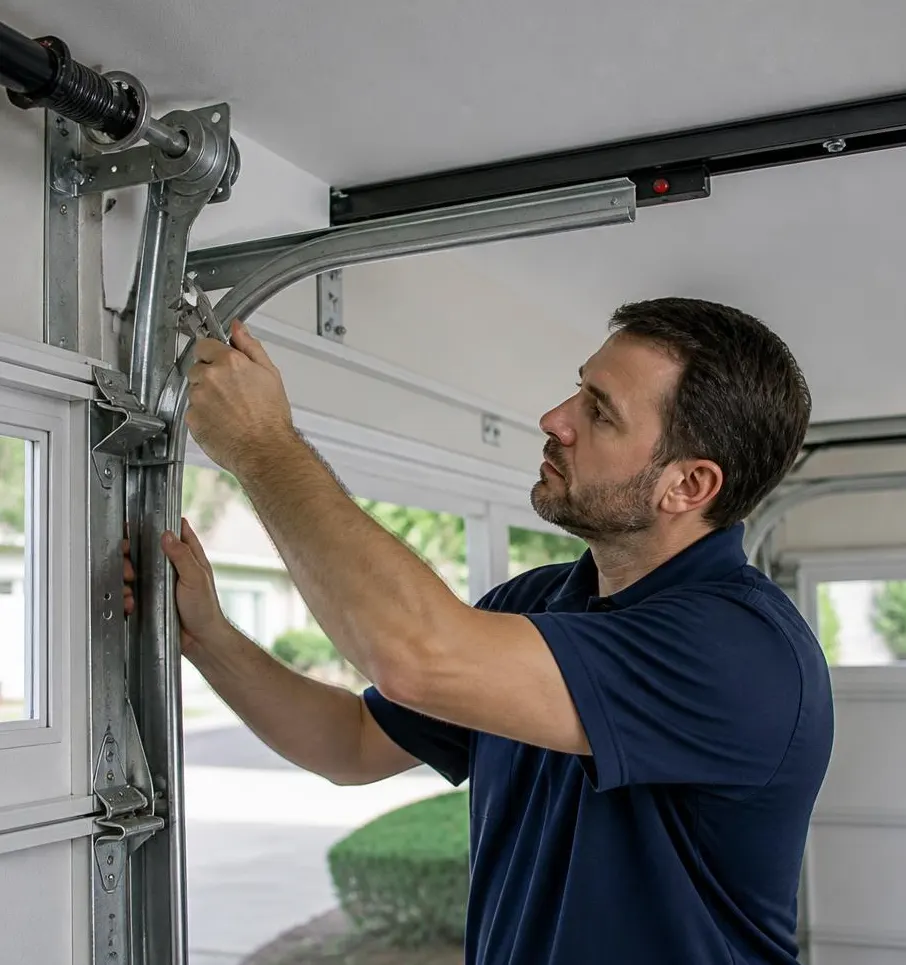
Cold thickens old grease, and salt-laden coastal air speeds up corrosion on rollers and hinges even faster than it would inland. A tech will run the door manually (with the opener disconnected) and feel for grinding or resistance at specific points on the track. The fix is cleaning off old gunk and rust with a cloth, then applying a silicone-based garage door lubricant to rollers, hinges, and the track — not WD-40, which washes out and attracts more grit in humid air.
3. Spring Tension
Metal contracts slightly in cold weather, which can shift spring tension just enough to make a door feel heavier or unbalanced on a chilly morning. A technician checks this by disconnecting the opener and lifting the door by hand to the halfway point — it should hold its position. If it drops or shoots up, tension is off. The fix ranges from a tension adjustment to a full spring replacement if the spring itself has fatigued, which is not a DIY job given how much force these springs store.
4. Opener Force and Limit Settings
If the door is mechanically fine but the opener still reverses or stalls, the next check is the opener's force and travel limit settings. Cold can affect belt tension on belt-drive openers and chain sag on chain-drive units, which throws off how much resistance the opener expects to feel before it assumes something is blocking the door. The fix involves recalibrating the force settings and checking belt or chain tension, sometimes paired with a sensor check since humidity and condensation can also affect the photo-eye safety sensors near the floor.
5. Weatherstripping and Panel Swelling
Vinyl weatherstripping along the sides and top of the door stiffens in cold and swells when it absorbs moisture, which is common given Jacksonville's humidity swings between warm afternoons and cooler nights. This can create just enough extra friction in the track to make the door drag. The fix is trimming or replacing the weatherstripping, and on older wood-composite panels, checking for swelling at the seams that may need sealing or panel replacement if it's gone too far.
6. Track Alignment and Rust
Last on the checklist because it's the least common cause: if moisture has caused rust buildup or slight panel swelling that's pushed the door out of alignment with the track, it'll bind at a specific spot every time rather than feeling uniformly stiff. The fix is realigning the track, and in coastal homes near Ponte Vedra Beach or Fernandina Beach where salt air accelerates rust, replacing corroded rollers or track sections before they become a bigger off-track problem.
When to Call Jacksonville Garage Door Pro
If you've broken the door loose by hand and it still drags, the opener keeps reversing, or the door feels unbalanced when you lift it manually, stop operating it and call us before the spring or cable fails completely. Our Garage Door Tune-Up & Maintenance service covers exactly this kind of seasonal check — lubrication, track alignment, opener force calibration, and seal inspection in one visit. If the issue turns out to be a worn or broken spring, our Garage Door Spring Repair technicians carry the right tension springs for your door size and handle the replacement safely, since this isn't something to attempt yourself.
If your garage door is sticking, sluggish, or won't open smoothly this winter, call Jacksonville Garage Door Pro for same-day service across Jacksonville, Jacksonville Beach, Orange Park, and the surrounding area.